
Predict the future by creating it
Marine Knowledge Center
shiptech.ca/blog/lfp-vs-lead-acid-marine-batteries
Marine Electrical Consultation
shiptech.ca/blog/lfp-vs-lead-acid-marine-batteries blog post
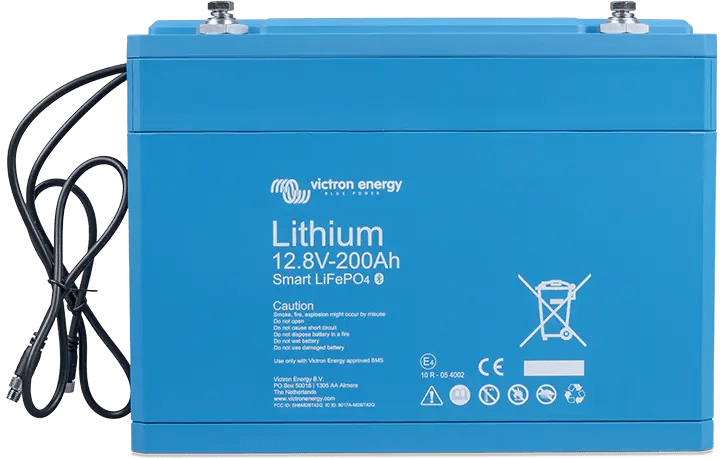
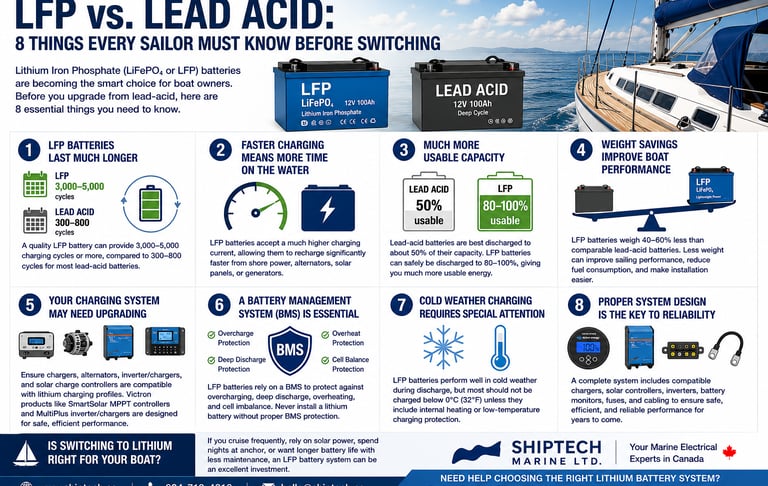
LFP vs. Lead Acid: 8 Things Every Sailor Must Know Before Switching Lithium Iron Phosphate (LiFePO₄ or LFP) batteries are becoming increasingly popular among boat owners due to their lighter weight, faster charging, and longer service life. However, upgrading from traditional lead-acid batteries requires more than simply replacing one battery with another. Here are eight important factors every sailor should understand before making the switch. 1. LFP Batteries Last Much Longer A quality LFP battery can provide 3,000–5,000 charging cycles or more, compared to 300–800 cycles for most lead-acid batteries. Although the initial investment is higher, lithium batteries often cost less over their lifetime. 2. Faster Charging Means More Time on the Water LFP batteries accept a much higher charging current than lead-acid batteries, allowing them to recharge significantly faster from shore power, alternators, solar panels, or generators. 3. Much More Usable Capacity Lead-acid batteries are generally recommended to be discharged only to about 50% of their capacity. LFP batteries can safely be discharged to 80–100%, giving you much more usable energy from the same battery size. 4. Weight Savings Improve Boat Performance Lithium batteries typically weigh 40–60% less than comparable lead-acid batteries. Less weight can improve sailing performance, reduce fuel consumption, and make installation easier. 5. Your Charging System May Need Upgrading Switching to LFP batteries often requires checking your charging equipment. Chargers, alternators, inverter/chargers, and solar charge controllers should be compatible with lithium charging profiles. Products such as Victron SmartSolar MPPT controllers, MultiPlus inverter/chargers, and Battery Management Systems (BMS) help ensure safe and efficient operation. 6. A Battery Management System (BMS) Is Essential Unlike lead-acid batteries, LFP batteries rely on an internal or external Battery Management System (BMS) to protect against overcharging, deep discharge, overheating, and cell imbalance. Never install a lithium battery without proper BMS protection. 7. Cold Weather Charging Requires Special Attention LFP batteries perform well in cold weather during discharge, but most should not be charged below 0°C (32°F) unless they include internal heating or low-temperature charging protection. If you boat year-round, consider batteries designed for cold climates. 8. Proper System Design Is the Key to Reliability The best lithium battery installation is a complete energy system—not just a battery replacement. A properly designed system includes compatible chargers, solar controllers, inverters, battery monitors, fuses, and cabling to ensure safe, efficient, and reliable performance for years to come. Is Switching to Lithium Right for Your Boat? For many boat owners, the answer is yes. If you cruise frequently, rely on solar power, spend nights at anchor, or want longer battery life with less maintenance, an LFP battery system can be an excellent investment. At Shiptech Marine Ltd, we supply quality Victron Energy products, lithium battery solutions, solar charge controllers, battery monitors, inverter/chargers, and marine electrical components to help you build a safe and reliable onboard power system. Need help selecting the right lithium battery system? Contact Shiptech Marine Ltd for expert advice and product recommendations.
SHIPTECH
7/4/20262 मिनिटे वाचा
LFP vs. Lead Acid: 8 Things Every Sailor Must Know Before Switching
Lithium Iron Phosphate (LiFePO₄ or LFP) batteries are becoming the preferred choice for many boat owners thanks to their longer lifespan, lighter weight, and faster charging. Before replacing your lead-acid batteries, here are eight important things to consider.
1. Longer Battery Life
LFP batteries typically last 3,000–5,000 charge cycles, compared to 300–800 cycles for lead-acid batteries. Although they cost more initially, they often provide better long-term value.
2. Faster Charging
Lithium batteries accept higher charging currents, allowing them to recharge much faster from shore power, alternators, solar panels, or generators. This means less waiting and more time on the water.
3. More Usable Power
Lead-acid batteries are best discharged to about 50% of their capacity. LFP batteries can safely use 80–100% of their capacity, giving you more usable energy without increasing battery size.
4. Significant Weight Savings
LFP batteries weigh 40–60% less than similar lead-acid batteries. Reducing battery weight can improve boat performance, handling, and fuel efficiency.
5. Check Your Charging Equipment
A lithium upgrade may require compatible chargers, inverter/chargers, alternators, or solar charge controllers. Modern systems such as Victron SmartSolar MPPT controllers and MultiPlus inverter/chargers are designed to work efficiently with lithium batteries.
6. A Battery Management System (BMS) Is Essential
Every LFP battery system needs a Battery Management System (BMS) to protect against overcharging, deep discharge, extreme temperatures, and cell imbalance. A properly installed BMS is critical for safety and battery life.
7. Cold Weather Matters
LFP batteries perform well during discharge in cold conditions, but most should not be charged below 0°C (32°F) unless they have built-in heating or low-temperature charging protection.
8. Design the Whole System
Replacing the battery alone isn't enough. A reliable lithium installation includes compatible chargers, battery monitors, solar controllers, fuses, cabling, and proper system protection.
Is Lithium Right for Your Boat?
If you cruise regularly, spend time at anchor, or use solar power, an LFP battery system can provide longer battery life, lower maintenance, faster charging, and improved onboard power management.
Shiptech Marine Ltd supplies genuine Victron Energy products, lithium battery systems, solar charge controllers, inverter/chargers, battery monitors, and marine electrical components to help you build a safe, efficient, and reliable onboard power system.
Need expert advice? Contact Shiptech Marine Ltd for assistance in selecting the right lithium battery solution for your boat.
© 2026 ShipTech. All rights reserved.

Prices and availability are subject to change without notice due to supplier costs, exchange rates, tariffs, and market conditions. Product images may differ from actual items. Please contact us to confirm current pricing and availability.